Collections in 90 days for managers and owners of dental practices
90-day practical plan for owners and managers: set up down payments, integrate digital payments and management software to reduce receivables and improve...
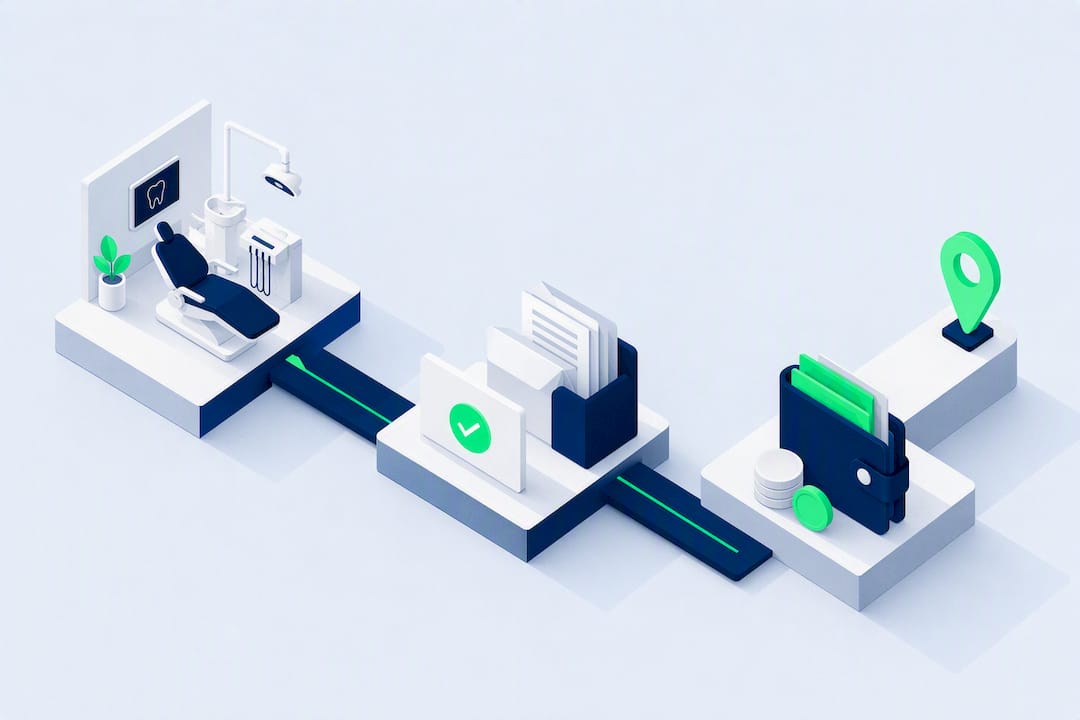
90-Day Collections for Dental Practice Managers and Owners
To immediately improve dental practice collections management, three things are needed: clear down payment policies, integrated digital payments, and management software that automates reminders and reconciliation. Without these basics, any other effort on billing and reporting remains a temporary fix. Those who apply these three levers together see a direct impact on cash flow within a few weeks, not months.
In brief:
Implementing clear down payment policies, digital payments, and automated management software allows you to increase cash flow in just a few weeks.
Setting up automatic payment plans and sending automated reminders reduces payment delays and simplifies daily reconciliation.
An appropriate management software must handle differentiated documents, block incorrect submissions to the Exchange System (SdI), and automate tax and healthcare deadlines.
Proper planning and monitoring, using KPIs like DSO and overdue receivables, allows you to immediately identify and correct any collection inefficiencies.
Changing collection habits requires a structured plan of at least 90 days, with training and constant monitoring of the new procedures.
TreatbaseSimplifies collections managementTreatbase automates invoices, reminders, and performance monitoring, reducing manual labor in the daily management of the practice.Discover Treatbase
Table of Contents
Operational checklist: 8 actions to implement today
Key features and tools: what to look for in management software
Daily processes and operational controls
Tax and compliance aspects impacting collections
90-day implementation: schedule and verification KPIs
Why payments arrive late (and how to avoid it)
The point of view: why management software matters more than an Excel sheet
Recommended resource: try Treatbase for your collections
Sources
Operational checklist: 8 actions to implement today
Those who manage the administration of the practice do not need theory, but a precise sequence to execute. Here are the eight actions that have the biggest impact on collections, in order of priority:
Make down payments mandatory on complex treatments (implantology, orthodontics, prosthetics) before starting care.
Activate a modern POS terminal and accept only traceable payments whenever possible, eliminating informal cash management.
Offer a modest discount for immediate full payment, when the treatment margin allows it.
Set up automatic payment plans in the management software, so installments are generated on their own without manual intervention.
Schedule automatic reminders via SMS or email for every deadline, before it becomes a delay.
Perform daily reconciliation of collections, comparing cash, POS, and bank account.
Set aside a fixed amount every month for taxes and ENPAM contributions, separating it from the operational account.
Assign precise roles: who collects, who reconciles, who follows up. Without clear responsibilities, every control becomes diluted.
This sequence does not require major investments. It requires daily discipline and a tool that supports it.
Key features and tools: what to look for in management software
Good dental management software must do the work that would otherwise fall on the front desk to do by hand every day. The features that really make a difference are few but precise:
Differentiated document management: paper invoice or PDF for the private patient, automatic submission to the SdI for B2B services.
Automatic blocking of SdI submission for healthcare services to individuals, to avoid costly regulatory errors.
Multichannel automation of reminders, capable of reaching the patient via SMS, email, or app without manual intervention.
Payment plans with automatic reconciliation, which update the status of each collected installment on their own.
Preconfigured financial reports with KPIs such as DSO (Days Sales Outstanding) and aging receivables by delay range.
Simple data migration, because a software change that requires weeks of manual work discourages even the most organized practice.
Complete cloud solutions start on average at around 60 euros per month, an amount that quickly pays for itself if the software eliminates hours of repetitive administrative work.
A tip: before choosing software, ask for a demonstration with real practice data, not with a generic sample case. It is the only way to see how it actually behaves with your patient base.
Daily processes and operational controls
Written rules are of little use if they do not become habits. You need repeatable, verifiable processes assigned to specific people.
Close the cash drawer every evening by reconciling cash, POS, and bank transfers received with what is recorded in the system.
Generate a weekly aging receivables report, with automatic escalation thresholds: a polite reminder at 7 days, a more direct one at 15, a phone call at 30.
Define a written procedure for refunds and credit notes, so disputes do not end up being managed on a case-by-case basis at the discretion of the front desk.
Clearly assign who checks what: reception collects, administration reconciles, the owner reviews discrepancies above a defined threshold.
Compare collections and clinical production every month: if production grows but collections remain stagnant, the problem is in the recovery phase, not the clinical one.
Automating some of these checks through reports generated by the software reduces the time spent on repetitive tasks and allows for quicker decisions when something doesn't add up.
Tax and compliance aspects impacting collections
Dental billing follows different rules than almost any other sector, and ignoring them generates errors that directly impact collections.
The ban on sending health-related services via SdI to individuals is permanent, confirmed by DLgs 81/2025: invoices to private patients must be issued in paper format or PDF, never electronically transmitted to the Exchange System.
Service data must still be transmitted annually to the Health Card System (Sistema TS), with precise deadlines that the software should handle automatically.
Revenue stamps apply to VAT-exempt invoices above the prescribed threshold, and must also be managed in virtual format if billing volume requires it.
Payment traceability is a necessary condition for the patient's tax deduction, according to Law 160/2019: without a traceable payment, the patient loses the benefit, which often generates avoidable disputes.
Management software that automatically blocks incorrect submissions to the SdI for B2C invoices eliminates one of the most common regulatory errors in practices that handle billing manually.
90-day implementation: schedule and verification KPIs
Changing a practice's collection habits requires a structured plan, not an all-at-once intervention.
Days 0-14: audit and policies. Analyze collections from the last six months, identify patients with recurring delays, and write down the down payment policy.
Days 15-45: software and POS setup. Select or reconfigure the management software, integrate the payment terminal, and set up automatic installment plans.
Days 46-75: team training. The front desk staff must know exactly how and when to trigger reminders, follow-ups, and reconciliations, without improvising.
Days 76-90: launch and monitoring. Go live, observe the first reports, and correct any friction in the process.
There are three KPIs to check at the end of the cycle: DSO (Days Sales Outstanding), the percentage of collections gathered during the first visit, and the volume of receivables overdue by more than 30 days. Automating reminders and installment plans tends to reduce both of the latter two indicators measurably starting from the first quarter of application.
Why payments arrive late (and how to avoid it)
Late payments are rarely due to a patient's bad intentions. In most cases, they stem from an unclear estimate, an installment plan never formalized in writing, or the lack of a reminder before the due date.
A transparent price list, communicated before starting treatment, reduces disputes and consequently the delays arising from misunderstandings about the final price.
The third factor, often underestimated, is the lack of a Plan B for those who cannot pay in a lump sum. Offering a formalized installment plan, with automatic deadlines and integrated reminders, converts a potential bad debt into a predictable flow. For practices with significant volumes of payment plans, a partnership with an external lender can free up immediate cash, although this entails an intermediation cost to be evaluated case by case relative to the treatment margin.
However, the deepest cause remains another: many practices do not treat collections as a process with an owner and deadlines, but as a secondary task left to whoever has time that day. Changing this, even before changing software, is already a step forward.
The point of view: why management software matters more than an Excel sheet
Most practices struggling with collections do not have a problem with insolvent patients; they have a process problem that relies on people's memory instead of automation. Treatbase addresses exactly this point: it automates payment reminders and installment reconciliation, so no outstanding balance is forgotten due to a lack of follow-up. The dedicated tutorials on payments and financial management show step-by-step how to set up these routines without overloading the front desk. Free data migration makes the transition less risky than most owners imagine.
— Matteo
Recommended resource: try Treatbase for your collections
Treatbase is the concrete alternative to Excel sheets and handwritten reminders to manage practice collections and payments: fewer administrative hours spent chasing overdue installments, more time for patients.
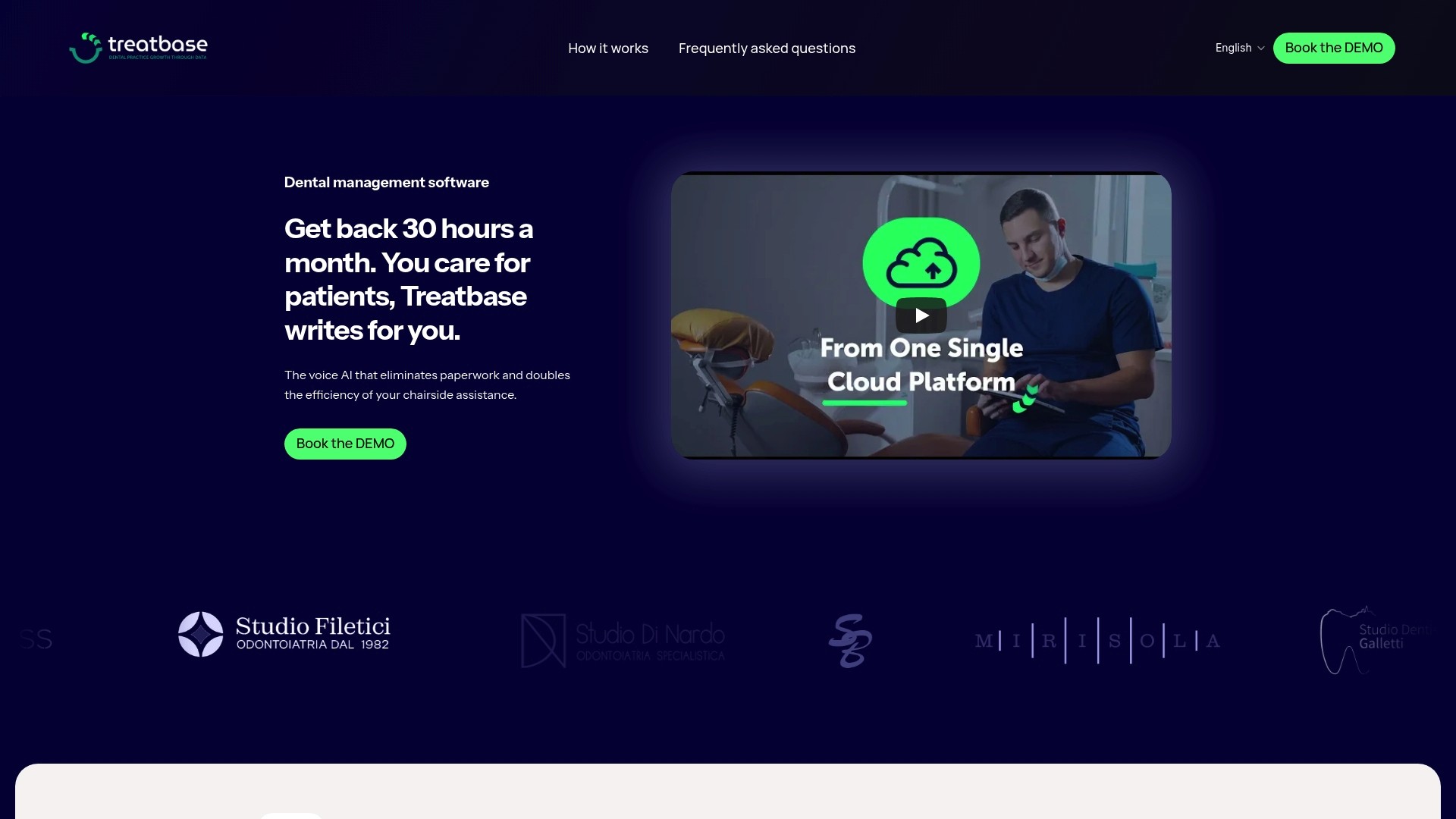
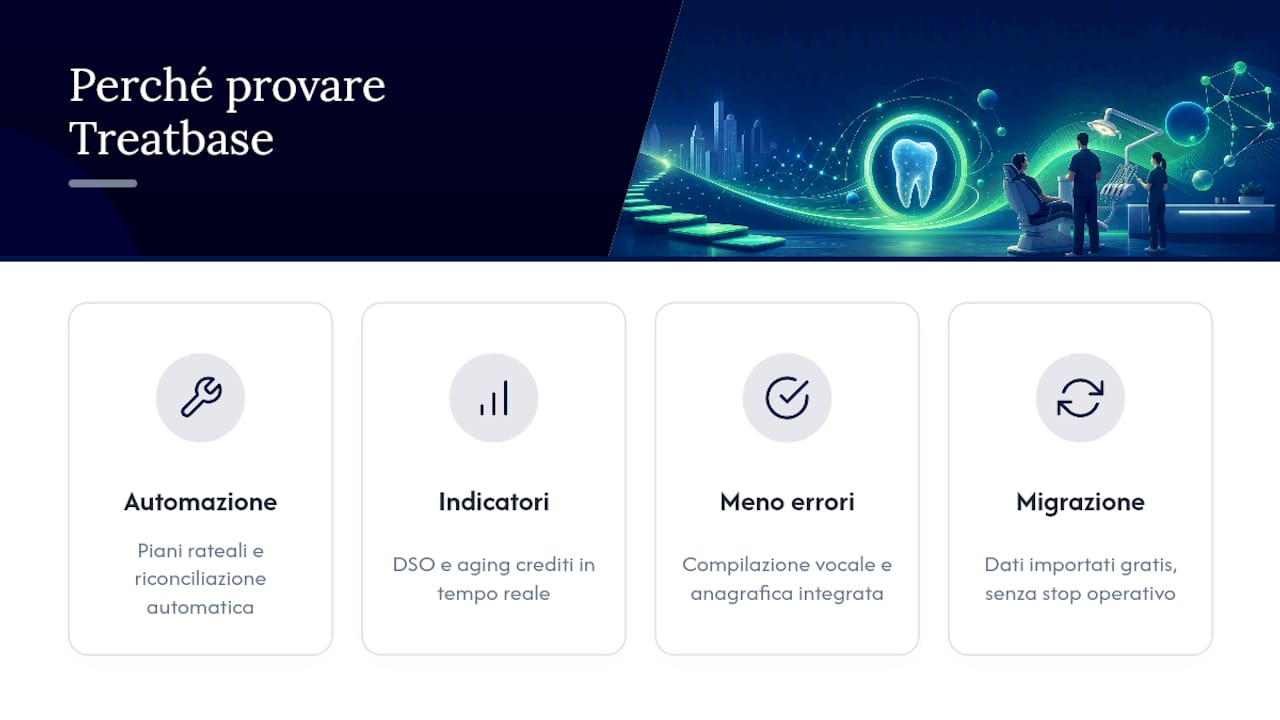
The module dedicated to payments generates automatic installment plans and reconciles collections without manual entries, while the financial management section provides real-time DSO and aging receivables for the practice—the very indicators needed to check if down payment policies are working. Voice dictation of clinical files and integrated patient records, described in the section dedicated to patients, further reduce manual errors that often generate billing delays. For those also considering broader document integration, resources like NexoLab offer useful material on digital management of clinical documentation.
Migrating data from your current software is free and does not require weeks of downtime. Book a Treatbase demo and see for yourself how much time you can recover in the very first month.
This article provides general information and does not replace the advice of a qualified financial advisor. Consult a qualified financial professional regarding your specific case before acting on this content.
Sources
Dentist Billing 2026: TS System and Price List | Centro Fiscale
Electronic Invoicing for Dentists: Definitive Guide - TheCalcoloIVA