More acceptances: digital dental estimates for clinics (+20%)
Operational checklist, layout templates, and Treatbase workflow to digitize practice quotes and increase acceptances by up to 20%.
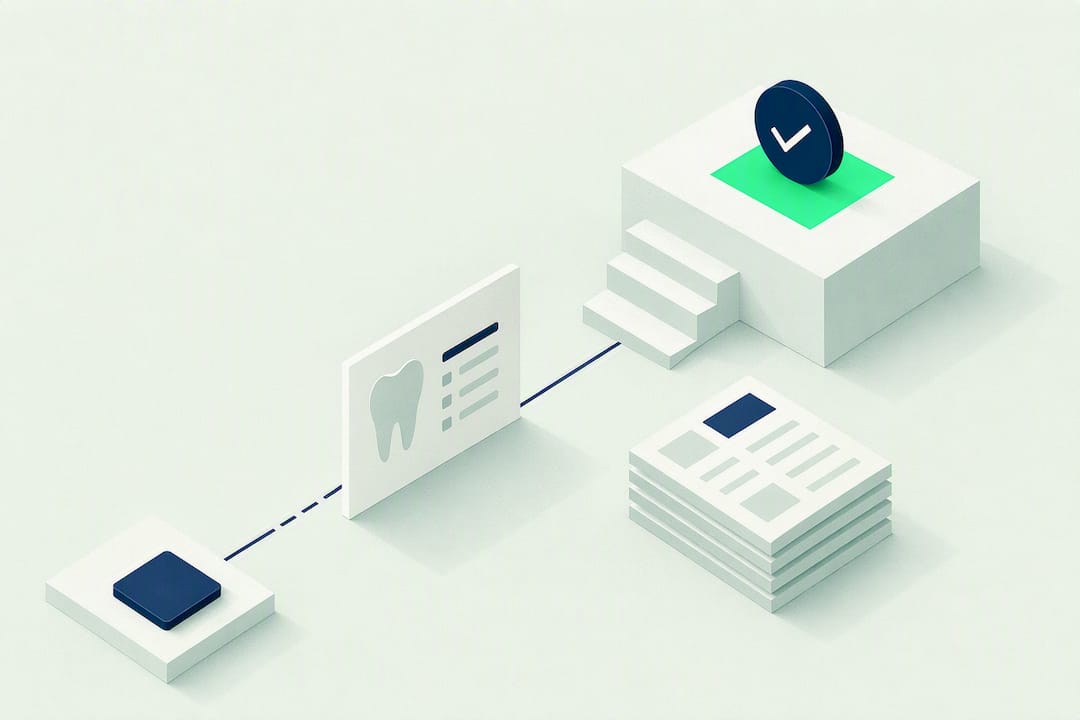
More acceptances: digital dental estimates for practices (+20%)
The format that works is simple: a clear template with separate items for diagnosis, procedure, materials, and sessions, tracked digital delivery via email or app, and an automatic follow-up within 48 hours if the patient does not reply. These three actions, applied together, boost the acceptance rate more than any price variation. A software like Treatbase automatizes all three steps without adding administrative work to the practice.
In brief:
The digital estimate increases acceptance by up to 20% compared to the paper one, thanks to clear layouts and opening tracking.
Automating the delivery and digital signature eliminates transcription errors, speeds up payment times, and reduces administrative work.
A comprehensive estimate must include diagnosis, procedure description, materials, number of sessions, post-treatment follow-ups, validity, and payment terms.
Italian regulation gives legal value to the digital estimate, which must be archived, updated, and digitally signed with a timestamp.
Using integrated systems like Treatbase allows the automation of the entire cycle, from diagnostic assessment to estimate generation and payment collection, saving over 1,000 hours monthly.
Treatbasetreatbase.comSimplify practice estimatesTreatbase reduces paper management and errors, helping the team dedicate more time to patient care.Discover Treatbase
Table of contents
Why digital estimates are better than paper
What a digital dental estimate must always contain
How to design a digital estimate that the patient truly understands
Which digital tools are needed to manage estimates in the practice
How to explain the estimate to increase patient acceptance
What Italian law says about digital dental estimates
Operational example: step-by-step digital workflow with Treatbase
What really matters when you digitalize estimates
Treatbase for the management of digital estimates in the practice
Sources
Why digital estimates are better than paper
The paper estimate has three problems that no one ever mentions out loud: it gets lost, it arrives late, and you never know if the patient actually read it. Digital solves all three at once, and the numbers confirm it.
Digital presentations with a clear layout can boost the acceptance rate by up to +20% compared to traditional paper estimates. This is not a small detail when we talk about treatment plans worth thousands of euros: an increase of this scale translates directly into recovered revenue that would otherwise remain stuck in a drawer or an ignored email inbox.
The operational advantage goes beyond the conversion rate. A digital estimate is generated in just a few minutes by selecting the procedures from a preloaded price list, instead of writing by hand or copying from a Word template every time.
Concrete benefits for the practice:
Less administrative time: no manual copying of items, no reprints for corrections.
Real tracking: you know when the patient opened the document, not just if you sent it to them.
Faster cash flow: an estimate that arrives right after the appointment, while the patient is still convinced of the need for care, is accepted sooner than one that arrives three days later by email.
Fewer transcription errors: the automatic link to the price list eliminates typos that generate disputes.
Consultable history: each estimate remains archived and linked to the clinical record, ready for future comparison.
The time saved by front desk staff accumulates. If a receptionist spends even just ten minutes per estimate to fill it out, correct it, and send it manually, in a practice that generates twenty estimates a week, this means over three hours of pure work that digital can absorb almost completely.
What a digital dental estimate must always contain
An estimate that generates trust is not the most visually beautiful one, it is the one that answers all the patient's questions before they even ask them. Every missing item is a reason for doubt, and doubt slows down the signature.
Here are the elements that cannot be missing, in order of appearance in the document:
Brief diagnosis: a line explaining why that procedure is necessary, written in understandable language and not just clinical code.
Description of the procedure: name of the procedure accompanied by a sentence explaining its practical purpose, not just technical nomenclature.
Materials used: brand or type (zirconia, lithium disilicate, titanium for implants), because patients often compare different estimates precisely on this item.
Number of expected sessions: how many visits are needed and at what intervals, information that influences the decision as much as the price.
Post-treatment follow-ups: whether they are included in the price or billed separately must be stated clearly to avoid subsequent disputes.
Validity of the estimate: an expiration date, typically 30 or 60 days, after which prices could be updated.
Payment terms: total amount, any down payment requested, possibility of installments and relative deadlines.
Modification conditions: what happens if complications emerge during treatment that were not foreseen in the diagnostic phase.
On the materials item, the formulation makes the difference between a patient who understands and one who feels excluded by technical language. A phrase like "zirconia crown, high-strength material with a natural appearance, 5-year warranty" communicates value much more effectively than "Zr crown". The patient does not have to guess what they are paying for.
Prices vary greatly based on these variables. A generic visit in Italy fluctuates on average between 50 and 200 euros, but for more complex treatments like implants or prostheses, the range widens enormously depending on materials and technology chosen. It is precisely this variability that makes detail essential: two estimates with the same final amount can hide very different procedures, and only a complete list allows for a proper comparison. To build coherent internal price brackets, some practices rely on national reference fee schedules as a starting point, then adapt them to their own real costs.
The value perceived by the person receiving the document depends more on the clarity of the explanation than on the number written at the bottom of the page: a well-argued treatment plan justifies a higher price than a bare estimate that looks like it was thrown together in a rush.
How to design a digital estimate that the patient truly understands
The structure of the document matters almost as much as the content. A well-written but poorly organized estimate is read halfway and abandoned.
The ideal order follows the logic of how the patient thinks about the problem, not how the dentist classifies it clinically:
Header: practice details, patient's name, date, document identification number.
Quick summary: a table of two or three rows with the main procedure, timing, and total amount, visible without scrolling.
Detail of phases: each session described separately with its relative cost, so the patient sees where every euro goes.
Alternative options: if different solutions exist (for example, implant vs. traditional bridge), presented side-by-side with costs and healing times compared.
Summary of costs and payments: total, any deposit, installment plan if provided, accepted payment methods.
Regarding visual hierarchy, a common mistake is using huge tables with ten columns that no patient reads thoroughly on a smartphone. Narrow tables of two or three columns are better, with a large font and generous white space between sections. Templates must remain customizable to differentiate materials, warranties, and options, and therapeutic alternatives work better when they appear side-by-side for comparison rather than one below the other in sequence.
For those starting from scratch, many dental management systems offer ready-made editable templates, with predefined fields for diagnosis, materials, and payment conditions. The configuration of internal price lists, which then feeds the automatic generation of the estimate, is set up only once in the practice data section of the management software and remains valid for all subsequent documents.
Which digital tools are needed to manage estimates in the practice
An effective digital estimate is not a single tool, it is a chain of functions that must talk to each other without anyone having to copy data from one system to another.
There are five categories of tools to consider:
Clinical management software: the heart of the system, where clinical records, calendar, and price lists reside.
Estimate and PDF generator: the function that transforms selected procedures into a professional document ready for delivery.
Digital signature: allows the patient to approve the estimate remotely with legal value, without having to return to the practice just to sign a paper.
Payment gateway: manages deposits, installments, and collections linked directly to the accepted estimate.
Open tracking: notifies the practice when the patient has actually opened and read the document.
When choosing these tools, three criteria matter more than all others: native integration via API among the various functions (because an estimate that lives isolated from the rest of the management software generates double work), ease of migration of historical data from the previous system, and compliance with Italian and European privacy regulations on health data.
The ideal technical workflow follows the patient from the chair to the checkout: the diagnosis entered during the visit automatically feeds the items of the estimate, the generated document is sent with a click and tracked, the digital signature makes it binding, and the acceptance activates the payment plan in the dedicated payments module. No step requires opening a second software or copying a number from an Excel sheet.
A tip: before changing management software, always ask for a demo showing the estimate from start to finish, from procedure selection to collecting the first installment. If the provider struggles to show you this complete workflow in real time, the connection between the modules is probably not as solid as promised.
An online estimate request service, when it exists, never replaces the face-to-face clinical evaluation: it remains a preliminary orientation tool, useful for booking the first appointment but not for generating the final document, which is always born after direct examination of the patient.
How to explain the estimate to increase patient acceptance
The conversation that accompanies the estimate weighs as much as the document itself. An excellent treatment plan poorly presented generates doubt; a simple one presented with clarity generates trust.
The method that works best follows a precise sequence:
Explain the diagnosis first, then the cost. The patient must understand why the treatment is needed before seeing the final number, otherwise they only perceive the expense without the benefit.
Show alternatives side-by-side, with costs and healing times compared on screen during the visit, so the choice becomes an informed comparison and not an imposition.
Accompany the digital delivery with a sentence explaining the next steps: something like "you will find full details in the attached document, with the available payment options, contact us for any clarification before signing."
Set an automatic reminder if the estimate remains unanswered after three or four days, instead of letting it fall into email oblivion.
Monitor two key indicators: the acceptance rate divided by type of procedure, and the average time elapsed between sending and signing.
The best workflow always combines oral explanation in the practice, with the plan shown on screen during the visit, with immediate digital delivery and tracking right after: this combination fosters a shared and conscious decision instead of an impulsive signature or, worse, a rejection due to lack of information.
On payment options, offering an installment plan visible directly in the estimate, and not only if the patient explicitly requests it, increases the chances of acceptance for more expensive treatments. Indicating deposit, number of installments, and deadlines directly in the document avoids awkward negotiations at checkout and shifts the economic decision to the moment when the patient is already mentally ready for the treatment.
What Italian law says about digital dental estimates
The estimate is not a simple informational sheet: it has contractual value, and this changes how it must be written and preserved.
The Consumer Code and ethical rules recognize a binding value to written or digital estimates, except for justified clinical variations emerging during treatment. In practice, this means that any modification to the original treatment plan, if it involves a different cost, must be communicated to the patient and approved by them before proceeding, not simply added to the invoice at the end of treatment.
Three operational practices to always adopt:
Keep every version of the estimate, including any subsequent changes, with date and linked approval signature.
Track payments through verifiable means (bank transfer, card, POS), a necessary condition for the tax deductibility of dental expenses by the patient.
Use digital signatures with a timestamp when possible, so the document has evidentiary value even years later in case of a dispute.
On deductibility, the patient will be able to deduct health expenses only if the payment is traceable: a cash collection without a formal receipt voids this tax benefit, even if the treatment was actually performed. It is worth remembering this explicitly in the estimate or in the communication that accompanies it, because many patients do not know and only discover it at the time of tax filing.
Operational example: step-by-step digital workflow with Treatbase
Seeing the workflow applied to a real case clarifies better than any theoretical list how the pieces fit together.
The typical path in a practice that uses Treatbase follows these steps:
During the visit, the dentist dictates the diagnosis aloud and the system transcribes it directly into the clinical record, without manual typing.
Proposed procedures are selected from the preloaded price list in the practice data section, with prices and materials already linked automatically.
The system generates the PDF of the estimate in seconds, ready to be sent to the patient via the patients tab.
Delivery is tracked: the practice receives a notification when the document is opened, not just when it is sent.
Upon the patient's digital signature, the payment plan with any installments is automatically activated, managed in the payments section.
On this basis, you can build additional automations that make a difference in the long run: an automatic tag on estimates left unanswered after a week, a reminder that triggers on its own to the patient, and a monthly report with the acceptance rate divided by type of procedure, generated by the financial management module.
A tip: do not expect results from day one. Give the new workflow at least thirty test run estimates before judging its actual impact on the acceptance rate: the first documents also serve to calibrate templates and language, not just to test the software.
According to the company, practices adopting Treatbase can save over 1,000 hours a month of administrative work, time that translates directly into more minutes dedicated to explaining the treatment plan instead of manually filling out documents.
What really matters when you digitalize estimates
The number one priority is not technology, it is clarity. I have seen practices invest in sophisticated software and get worse results than those who use a well-written Word template, simply because they filled the document with clinical abbreviations that the patient does not understand.
The measurement of results is always overlooked. Few practices systematically track the acceptance rate by type of procedure or the average response time, yet these are the numbers that tell if the new format works or if an adjustment is needed.
Practical advice is to test a single template on one type of procedure for ninety days, measure acceptance before and after, and only then decide whether to extend it to the rest of the list. Those who skip this step and change everything at once often cannot even understand what worked.
— Matteo
Treatbase for the management of digital estimates in the practice
Treatbase is the concrete alternative to work made of Word templates, manual sending, and Excel sheets to track who signed and who didn't. The difference lies in the end-to-end automation: the diagnosis dictated aloud during the visit directly feeds the estimate, the PDF starts already tracked, and the digital signature automatically activates the payment plan without anyone having to copy a number from one system to another.
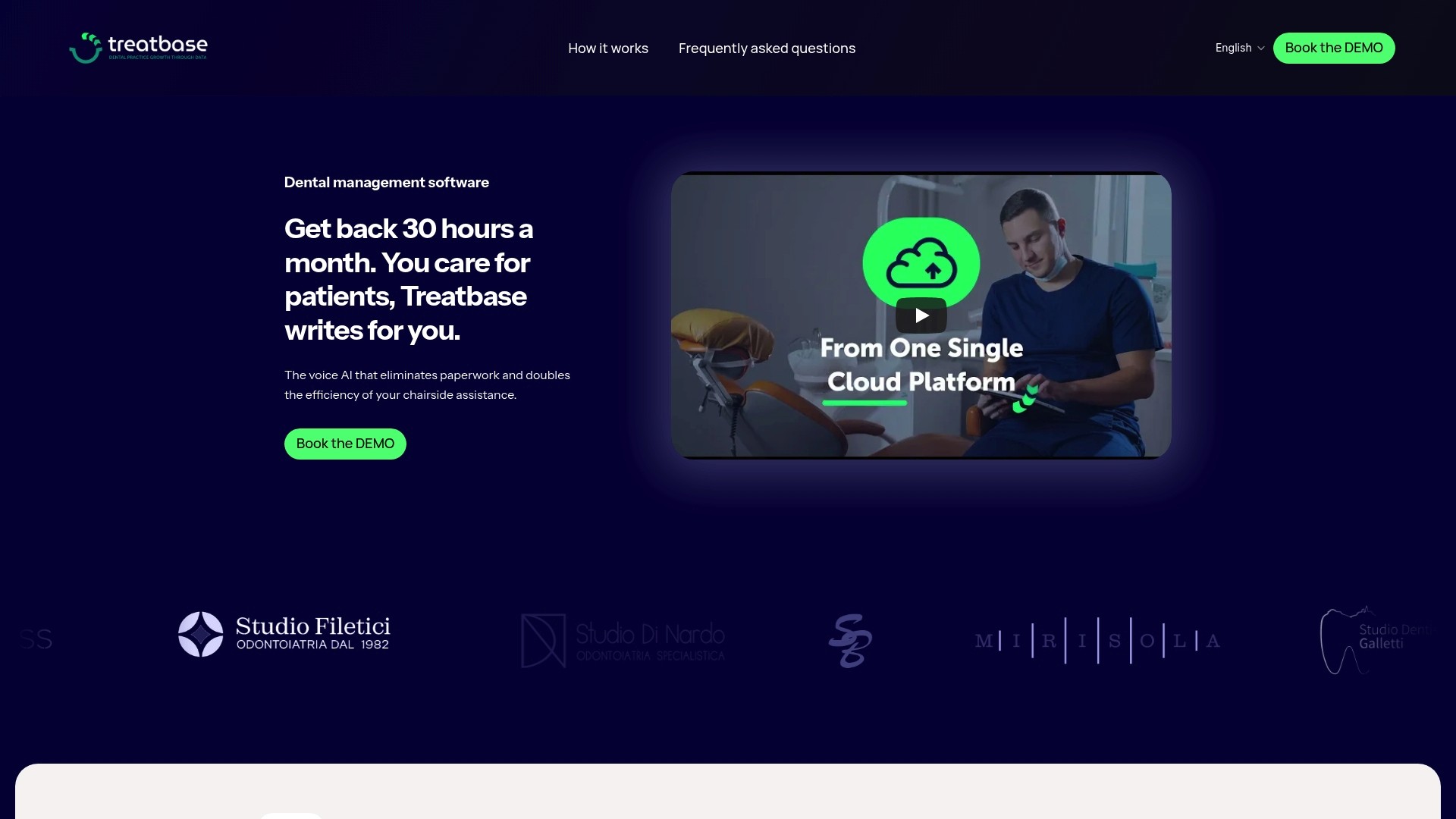
The management software covers the entire estimate cycle: generation from procedures selected in the record, delivery with opening notification, digitally binding signature with legal value, automatic reminders for pending documents, and reporting on the acceptance rate. According to the company, practices switching to Treatbase save over 1,000 hours a month of administrative work, with free data migration from the previous software and zero downtime during startup.
If you want to see how the complete workflow works, from visit to signed estimate, request a demo on Treatbase and see for yourself how much time you can recover each week.
Sources
Digital in dentistry. More estimates accepted, less time wasted for dentist and patients
Dentist prices: what determines the cost of a visit | Adamanti
Dental Estimate Management: How to Increase Acceptance | Drilon Hametaj